
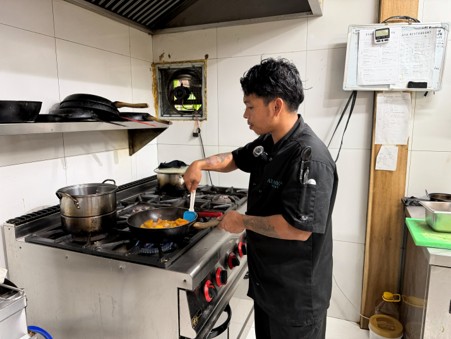
Zero waste in the kitchen is not a slogan for us. It is a set of small decisions made every day in Lamoro, El Nido: how much fish to bring in from Bacuit Bay, which greens to pull at our New Ibajay farm, and what happens to a kalamansi once its juice is already in your glass.
We will be honest from the first paragraph. Atalaya is not a zero-waste restaurant yet, and very few kitchens anywhere are. What we can show you is the work: the habits our team has built, the ones we are still building, and the problems we have not solved.
This is how our kitchen and bar cut food waste and plastic, why it matters so much in a place like El Nido, and a few ideas you can borrow for your own kitchen at home.
Why Zero Waste in the Kitchen Matters in El Nido
Food waste is one of the quietest climate problems on the planet. The UN Environment Programme's Food Waste Index Report 2024 estimates that about 19 percent of the world's food was wasted in 2022, roughly 1.05 billion tonnes. Restaurants and other food service businesses accounted for around 290 million tonnes of that.
The same report links food loss and waste to an estimated 8 to 10 percent of global greenhouse gas emissions. It also found that hotter countries tend to waste more food per person at home, partly because heat shortens the life of fresh produce. In a tropical kitchen like ours, that is not an abstract statistic. It is Tuesday.
A protected place asks more of its kitchens
El Nido sits inside the El Nido-Taytay Managed Resource Protected Area, which covers more than 36,000 hectares of land and 54,000 hectares of marine waters. The limestone, the reefs and the fish that reach our grill all depend on what this town sends into the sea.
That is why El Nido regulates single-use plastics through a local ordinance, and why the Philippines' Ecological Solid Waste Management Act (RA 9003) asks every establishment to segregate waste at source and put composting and recycling ahead of the dump. A 2019 study of El Nido's plastic ban found it helped remove plastic straws and bags from the waste stream, though bottled water remained a stubborn problem.
Less waste is also better cooking
There is a business case too. A Champions 12.3 review of 114 restaurants in 12 countries found the average restaurant saved $7 for every $1 invested in cutting kitchen food waste. We read that as proof of something every good cook already knows: a kitchen that wastes less is a kitchen that pays attention.
7 Zero-Waste Habits in Atalaya's Kitchen and Bar
None of these are new inventions. They are old kitchen sense, applied with care and repeated every single day.
1. Grow and buy close to home
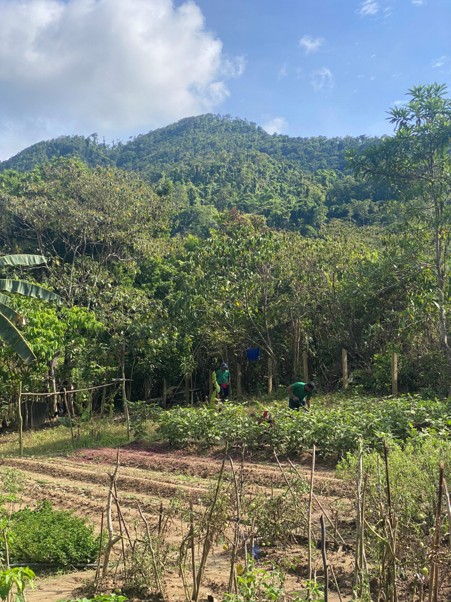
Just 12 minutes from the restaurant, in New Ibajay, our own farm grows specialty herbs, seasonal fruit, vegetables and farm-fresh eggs. What we cannot grow, we buy from trusted local farmers and from fishermen working Bacuit Bay.
Short distances mean less packaging, less time in transit and less produce wilting in a cooler. A bunch of basil picked in the morning and muddled into a cocktail by sunset does not need plastic wrap to survive the trip.
2. Cook with the harvest, not against it
A menu that refuses to bend is a menu that wastes. When the farm has a glut of greens or a tree drops more fruit than planned, our team finds a place for it: a special, a garnish, a breakfast bowl, a syrup for the bar.
This is why some plates on our menu shift with the season. Seasonality is not only about flavor. It is the simplest way to use what the land gives you before it spoils.
3. Respect the whole fish
A fish from Bacuit Bay is more than two fillets. The firmest, freshest cuts become kinilaw and tiradito, where acid and chili do the cooking. Other parts go onto the fire-grill, and the bones and heads can build the stock behind a sauce.
We think a kitchen that only knows how to use the fillet should not be buying whole fish. That is an opinion, and we are happy to stand by it.
4. Let the fire do more than one job
Asado by Atalaya starts at 5 PM every day, and a good fire has a long life. Once the flames settle, the embers keep working: vegetables roast in the coals, and cuts cooked al rescoldo pick up that deep, smoky edge.
Planning the grill around the fire's whole arc means fewer restarts and better use of every load of fuel. Trimmings from portioning steaks find their way into staff meals instead of the bin.
5. Close the loop at the bar
Our botanical cocktails lean on kalamansi, basil, Thai chili and island fruit, and a busy bar produces a lot of peels and stems. Many of these still carry flavor and aroma, so they can be turned into syrups, infusions and garnishes.
The U.S. EPA calls this upcycling, and it ranks among the most preferred ways to handle food that would otherwise be wasted. At a sunset bar, it mostly means drinking what used to be thrown away.
6. Send scraps back to the soil
Some waste cannot be eaten: coffee grounds, eggshells, onion skins, the tough ends of herbs. Separated at source, as RA 9003 requires, this organic material can be composted and returned to the farm as soil.
The idea is simple. The garden feeds the kitchen, and the kitchen feeds the garden back.
7. Serve without the plastic
El Nido's plastics ordinance sets the floor, and we try to build above it. That means glassware and reusable servingware in the dining room, no plastic straws in your cocktail, and buying in bulk where we can so fewer single-use wrappers arrive at the back door.
How Our Habits Map to the Wasted Food Scale
The U.S. EPA's Wasted Food Scale ranks ways of handling food from most to least preferred. Prevention sits at the top. Landfill, incineration and sending food down the drain sit at the bottom. Here is where our work lands.
| EPA pathway | What it means | How it looks at Atalaya |
|---|---|---|
| Prevent | Stop waste before it exists | Buying close to home, seasonal specials, whole-fish cooking |
| Upcycle | Turn scraps into new food | Peels and herb stems into bar syrups and infusions |
| Compost | Return organics to the soil | Kitchen scraps back to the New Ibajay farm |
| Landfill | Least preferred option | What we work every week to keep shrinking |
The lesson from the scale is clear. Composting is good, but cooking smarter so there is less to compost is better.
What We Have Not Solved Yet
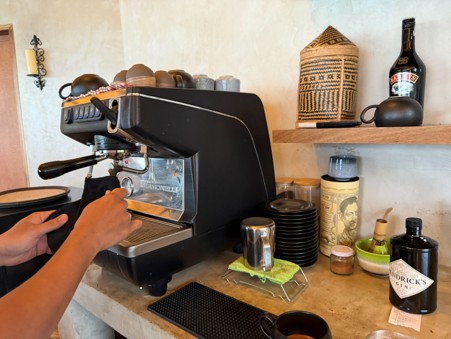
A blog about zero waste in the kitchen that only lists wins would not be very honest. These are the problems still on our whiteboard.
- Drinking water. Safe groundwater is a real challenge in El Nido, and the town's own research shows bottled water is the hardest plastic habit to break. We are looking at better refill and filtration options.
- Imported bottles. Our wine list and some spirits travel a long way to reach Lamoro. Glass is heavy to ship and hard to recycle on an island.
- Measuring properly. Champions 12.3 recommends a simple rule: target, measure, act. We are still building the habit of weighing what we throw away, so we can prove our progress with numbers instead of good intentions.
We would rather tell you this now than pretend the job is finished.
Zero Waste in the Kitchen at Home: 5 Tips From Our Team
Most of the world's food waste happens in homes, not restaurants. These are the habits our cooks use on the line that translate straight to a home kitchen.
- Shop for the week you actually have. Plan three or four meals, not seven. Leftover nights fill the gaps.
- Store herbs like flowers. Trim the stems and stand basil or cilantro in a glass of water. They last days longer.
- Make a scrap stock. Keep a container in the freezer for onion ends, herb stems and fish or chicken bones. When it is full, simmer it into stock.
- Squeeze every citrus twice. Juice the kalamansi or lime, then steep the peels in sugar syrup or hot water for a quick cordial.
- Compost what is left. Even a small bin works. The EPA's guide to composting at home covers the basics.
For more ideas, the EPA also keeps a practical guide to preventing wasted food at home.
Taste the Work at Sunset
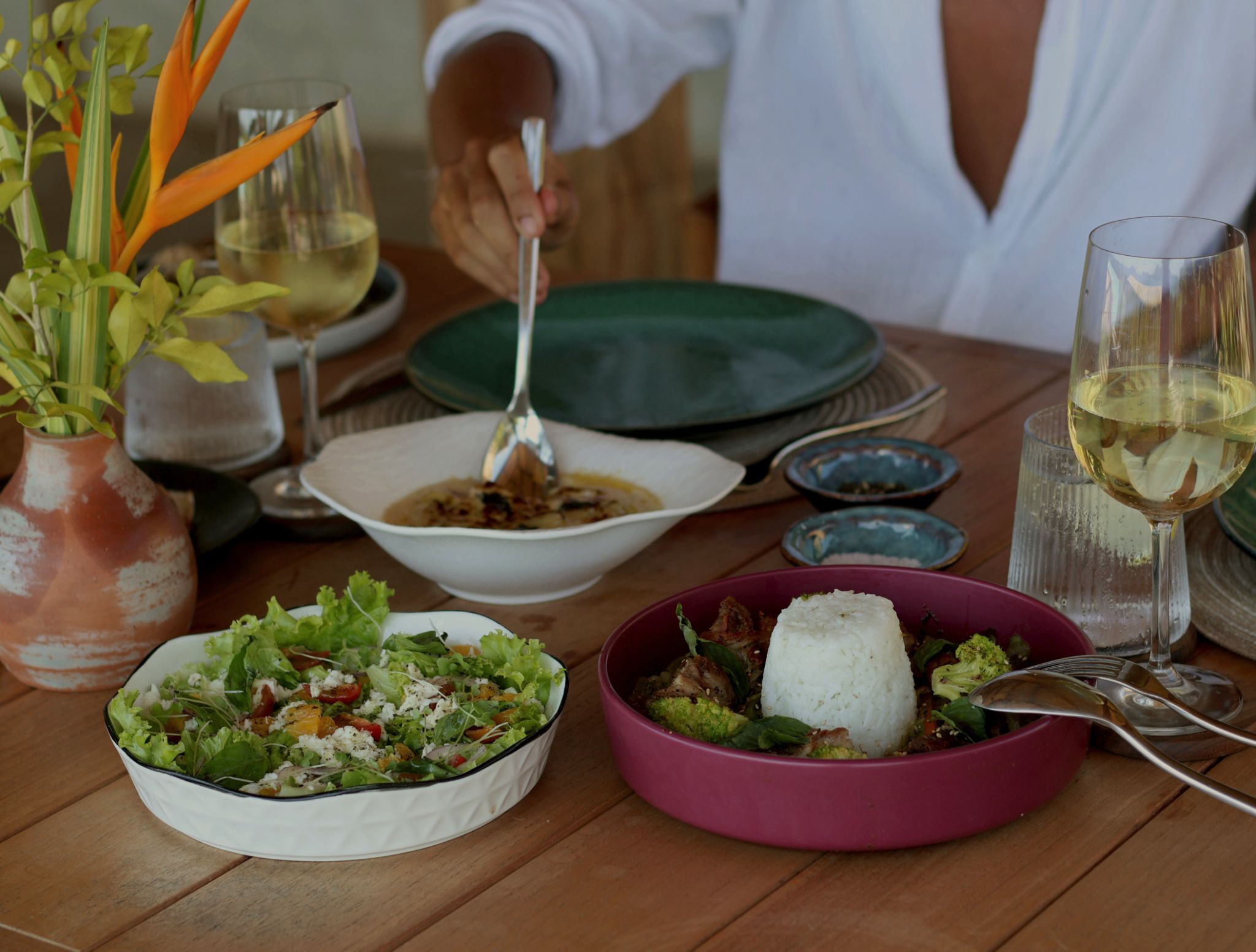
The best way to understand how we cook is to sit at the table. Come for golden hour over Bacuit Bay, order something from the grill, and ask your server what came from the farm today. Every dine-in guest also gets a free sunset swim, no minimum spend.
The grill is lit at 5. Your table's ready at sunset. And if you want more stories from our kitchen, the Atalaya Journal is always open.
Frequently Asked Questions
Is Atalaya a zero-waste restaurant?
Not fully, and we do not claim to be. Atalaya is working toward zero waste in the kitchen through local sourcing, whole-ingredient cooking, upcycling at the bar, composting and plastic-free service.
Where does Atalaya get its ingredients?
From our own farm in New Ibajay, 12 minutes away, plus trusted local farmers and fresh seafood from Bacuit Bay.
Does El Nido ban single-use plastics?
Yes. El Nido regulates single-use plastics through a municipal ordinance because the town sits inside a protected area. Restaurants and shops are expected to use reusable or eco-friendly alternatives.
How can I reduce food waste at home?
Plan meals realistically, store herbs in water, freeze scraps for stock, reuse citrus peels and compost what is left. Prevention always beats disposal.
Sources
- UNEP, Food Waste Index Report 2024
- Champions 12.3, The Business Case for Reducing Food Loss and Waste: Restaurants
- U.S. EPA, Wasted Food Scale
- U.S. EPA, Upcycling Basics
- DENR, Republic Act 9003: Ecological Solid Waste Management Act of 2000
- UNESCO, El Nido-Taytay Managed Resource Protected Area
- Quintana, C. (2019), Evaluation of the Single-Use Plastic Ban in El Nido, Palawan, Central European University